

Have you ever felt like you had to hide the details of your past because of shame?
The shame that came with getting divorced in Christian circles got so bad that I hid it from the new people I met. (Note: I’ve been divorced for over 25 years.)
I moved from Chicagoland to Texas for a new job. I didn’t know a single soul. I figured this was my chance to get a fresh start. When people asked me if I’d been married before, I changed the subject, pretended I didn’t hear them, or sometimes I said no.
I didn’t know I was supposed to be ashamed about my divorce. It was taught to me by the Church.
Here is how it formed:
Several years before my move to Texas, I was starting a new position at a megachurch. I walked into my new boss’s office, and he introduced me to a visitor. To this day I have no idea why this married man started asking questions about my relationship status. It felt extremely intrusive for a total stranger to ask me what you’ll read next.
Man: “Nice to meet you. Are you single?”
Me: “Uh, yes.”
Man: “Have you been married before?”
I stood there shocked at the intrusion into my life in front of the new boss I’d only known for two days. I looked at my boss, expecting him to say I didn’t have to answer. His eyes opened wide, his head tilted to the side, and he leaned in to hear my response.
Me: “Yes.”
My new boss’s eyes got larger. And I swear his mouth dropped open.
The guest I had just met continued, “Was it a biblical divorce?”
Biblical?
I had only been a follower of Jesus Christ for a year. I wasn’t sure of the definition of “a biblical divorce.” But I felt the atmosphere shift in the room. My answer would determine if I was accepted or not. The weight of my answer seemed more important than why I got divorced at such a young age.
Do I tell them I left the marriage … so no? But I wasn’t walking with the Lord yet … so yes? He was emotionally abusive and probably gay … does that make it biblical?
“Yes, it was biblical” came out of my mouth faster than I could think.
My boss still looked shocked. The guest smiled and said ok and moved on to a different subject like I hadn’t just been exposed and humiliated. I walked out of my boss’s office back to my desk with my eyes on the floor, heart pounding and tears welling up in my eyes.
Shame.
Later I called my best friend. She knew my story and was the only person I trusted with my wounded heart because she prayed for me to know Jesus for years without any condemnation for the life I was living at the time. I asked her to help me understand if my divorce was biblical or not. I found out it was okay in God’s eyes to get divorced under two conditions: abandonment or adultery (Matthew 5:32, Matthew 19:19, 1 Corinthians 7:15).
I abandoned my husband when I left. The Bible didn’t mention if there were reasons it was okay to leave. So I thought I was in the wrong and could never be married again.
Shame.
Ever since I was a little girl, all I wanted was to love someone and be loved in return. I ignored warning signs and married a man who wasn’t interested in being intimate. It was beyond physical intimacy … he didn’t want to kiss me goodnight, have sex, or spend time with me. He was emotionally abusive … saying things like, “I love you, but no one else likes you.” I didn’t notice the little ways he isolated me from friends and family at first. Eventually, all I knew was that I was a shell of the person I used to be, and I made the hardest decision of my life. I left. And years later, I found out that, according to God’s rules, I couldn’t ever be married again. How was I supposed to know that then? Was I to live my entire life without being loved because of my ignorance?
I cried. I asked my friend why divorce is the only unforgivable sin.
Shame.
I spent years saying no to anyone who asked me on a date. I didn’t want to sin against God. I didn’t want to cause a good man to commit adultery by dating me. (Matt 5:32)
Shame.
So yes, when I moved to Texas, I didn’t want anyone to know I’d ever been married before because I didn’t want to tell my story and hear the question again, “Was it biblical?”
Shame.
See, shame doesn’t say you did something wrong—it says you are a bad person. It makes you hide from grace. It alienates you from those who love you. It discourages you from becoming who God created you to be. But more importantly, it keeps you from being who God REDEEMED you to be.
Jesus died and took our sin—AND our shame.
There is nothing we can do to get away from God’s love. We can’t disappoint Him enough to walk away from us. He doesn’t withhold any good thing. He has great plans for us that include being loved.
Acceptance.
I’ve heard a lot of stories of people being hurt by the Church because they were shamed, betrayed, or ostracized by fellow believers because of their past. This shouldn’t be the case. It should be the safest and most accepting community.
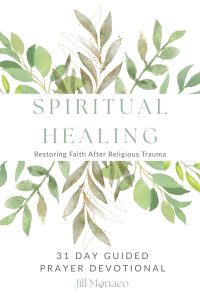
I also learned that my divorce was biblical. Processing the years I lost because I believed a lie made me angry. But it also brought me closer to the true heart of God. This and other experiences of coercive control and manipulation in the Church have inspired me to be an advocate for the spiritually abused. If this resonates with you, you can find free resources on my website or purchase my book, Spiritual Healing: Restoring Faith After Religious Trauma, on Amazon.
I’m not sure if I’ll ever be married again. But I do know one thing …
I will spend the rest of my life attacking shame with perfect acceptance—love.
P.S. As a freedom coach and mentor, I have a course for singles who have had experiences like mine. I hope to lead people away from the shame and lies they believe about themselves and come into the truth of unconditional acceptance.




I believe the question that “Have you been married before,” goes beyond some serious boundaries. In my post-divorce life, I’m happy to say that I now understand boundaries are okay and even necessary. I wish I always had that freedom in my past to say, “That’s none of your business,” and I am glad there are friends who have earned my trust enough to be able to be vulnerable with.
Thank you for putting this kind of thing into the light-of-day, where it has much less power to overwhelm us.